
Why Is My AC Freezing Up? Causes and What to Do
· By Leandro Souza
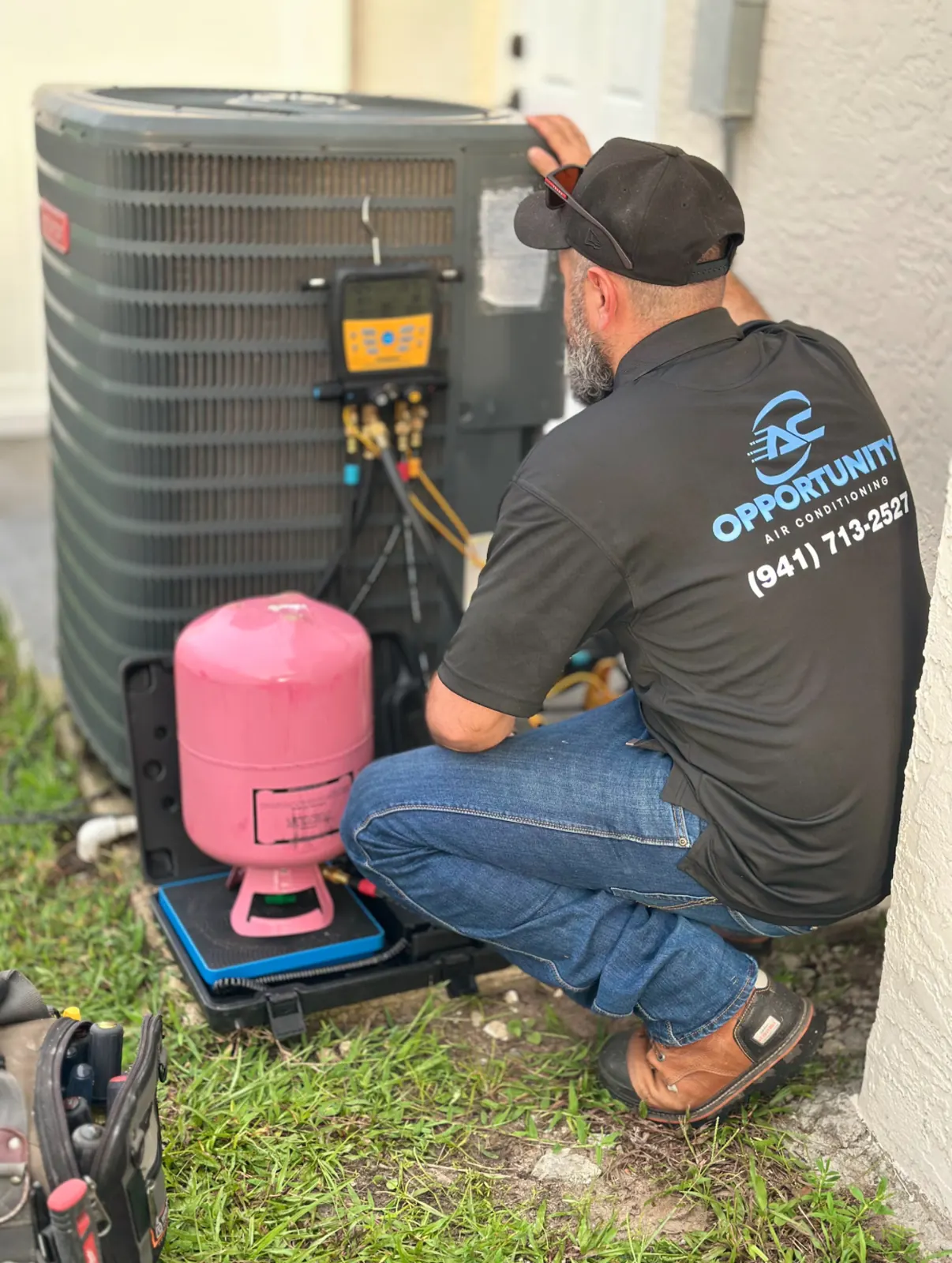
Finding ice on your air conditioner when it is 90 degrees outside feels like a contradiction. But a frozen evaporator coil or iced-over copper line is one of the most common AC problems we see. It always has a cause, and running the system frozen can turn a small repair into a big one.
What to do right now
Turn the cooling off at the thermostat and set the fan to ON so air moves across the coil and helps it thaw. Put towels down if water starts to drip. Do not chip at the ice. Call a technician once it is thawed or sooner if water is a problem.
Cause 1: Restricted airflow
A very dirty filter, closed or blocked vents, a dirty evaporator coil or a failing blower motor all reduce airflow across the coil. With less warm air moving over it, the coil gets too cold and moisture freezes on it.
Cause 2: Low refrigerant
Air conditioners do not use up refrigerant. If it is low, there is a leak. Low refrigerant drops the pressure and temperature in the coil, which leads to freezing. The fix is finding and repairing the leak, then charging the system correctly.
Cause 3: Drain or other issues
A clogged drain, a malfunctioning thermostat or running the system at a very low setting when it is cool outside can also contribute. A technician checks all of these.
Why ice forms on an air conditioner
The indoor coil is designed to run cold, but above freezing, so moisture condenses into water and drains away. When something lowers the coil temperature too far, that moisture freezes instead. Ice then blocks airflow, which makes the coil colder still, and the problem feeds itself until the coil and the suction line are covered.
The suction line is the larger, insulated copper line running to the outdoor unit. Frost or ice on it, or on the outdoor unit itself in summer, is a clear sign something is wrong.
Airflow problems in more detail
A clogged filter is the most common airflow problem and the easiest to fix. Others include closed supply vents in unused rooms, blocked return grilles, a dirty evaporator coil that restricts air passing through it, a blower motor or capacitor that is weakening, a slipping belt on older equipment, or collapsed and disconnected ductwork in the attic. A technician measures airflow and temperatures to find which one applies.
Refrigerant problems in more detail
Low refrigerant from a leak is the other main cause. Leaks can develop in the evaporator coil, the condenser coil, the line set or at fittings and valves. Finding the leak may involve electronic leak detection, bubble testing at fittings, or pressure testing. Once repaired, the system should be evacuated and charged to the manufacturer specification, not just topped off.
A restriction in the refrigerant circuit, such as a clogged metering device or filter drier, can also cause freezing and is diagnosed with pressure and temperature readings.
Why running a frozen system is risky
When the coil is frozen, refrigerant may not fully evaporate before it returns to the compressor. Liquid refrigerant reaching the compressor can damage it, and the compressor is the most expensive part of the outdoor unit. That is why turning cooling off as soon as you see ice is the right move.
After it thaws: water management
A frozen coil holds a lot of water. As it melts, the drain pan and line must handle a sudden surge. If the drain is slow, the pan can overflow. Put towels around the air handler, check the pan, and keep an eye on ceilings below attic units. If water is spreading, turn the system off at the thermostat and the breaker.
Getting it fixed in Sarasota and Manatee County
Opportunity Air Conditioning diagnoses frozen systems by checking filters, airflow, refrigerant pressures, temperatures and the drain. We tell you the cause and the price before any work. Same-day service is available 7 days a week, and there is no trip fee for the visit.
How to prevent it from happening again
Once the cause is fixed, prevention is straightforward. Keep the filter on schedule, keep supply vents and returns open, and schedule maintenance so coils are cleaned and refrigerant pressures are checked. If the freeze was caused by a leak, ask the technician to confirm the repair held at the next visit.
Freezing in mild, humid weather
Many homeowners are surprised to see a frozen coil on a cool, rainy day rather than in peak heat. When the outdoor temperature drops and the thermostat is set low, the system can run with little heat to absorb, and the coil temperature can fall below freezing, especially if airflow is already a little restricted. Avoid very low thermostat settings on mild days, keep the filter clean, and if freezing happens in cooler weather, mention it to your technician; it is a useful clue.
Preventing a frozen AC
Change the filter on schedule, keep vents open, and keep up with maintenance so coils stay clean and refrigerant problems are caught early. Opportunity Air Conditioning diagnoses frozen systems across Sarasota and Manatee County with same-day service and no trip fee.
Frequently asked questions
- Can I keep running my AC if it is frozen?
- No. Running it frozen can damage the compressor. Turn cooling off and let it thaw.
- Does a frozen AC mean I need more refrigerant?
- Sometimes, but refrigerant does not get used up. Low refrigerant means a leak that should be found and repaired.
- How long does it take an AC to thaw?
- Often a few hours with the fan running, depending on how much ice there is.
- Why is there ice on my outdoor AC lines in summer?
- Ice on the larger copper line usually means low airflow or low refrigerant. Turn cooling off and call for service.
- Can closing vents cause my AC to freeze?
- Closing too many vents restricts airflow and can contribute to a frozen coil.
Related services
Serving
Found this helpful? Make us a preferred source on Google.
Ready for an exact price?
Get a free, no-pressure in-home estimate. Real numbers for your home, not a phone guess.