
AC Drain Line Clogged? Why It Happens in Florida and How to Fix It
· By Leandro Souza
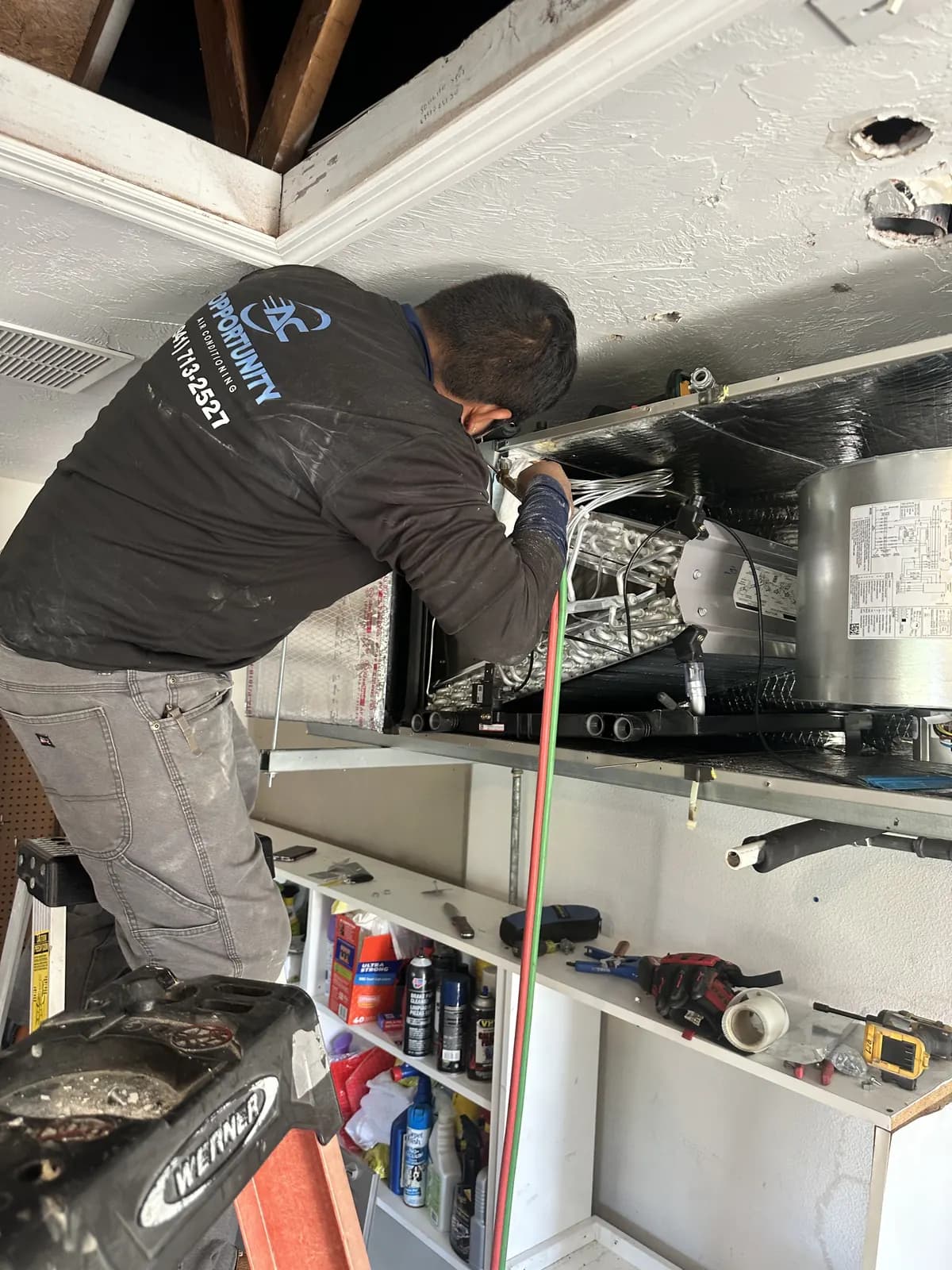
Every hour your air conditioner runs in Florida, it pulls water out of the air. That water drips off the indoor coil into a pan and leaves the house through a small pipe called the condensate drain line. When that line clogs, things go wrong fast: the system shuts off, or water ends up in your ceiling, closet or garage.
It is one of the most common service calls in Sarasota and Manatee County. Here is why it happens and how to prevent it.
Why Florida drains clog so often
Warm, wet, dark pipes are perfect for algae and slime. Combine that with dust that gets past the filter, and the drain line slowly narrows until it stops flowing. Because Florida systems run so many hours, the drain line handles far more water here than in drier climates, so buildup happens faster.
Signs your drain line is clogged
The system shuts off and will not restart, often because a float or safety switch has tripped. Water appears around the air handler or in the secondary pan. You notice a musty smell near the unit. In attic installations, a water stain may appear on the ceiling below.
What you can safely do
Turn the system off at the thermostat. If your installer added an accessible cleanout or vent on the drain line, many homeowners can pour a small amount of plain water through it to check flow. Ask your technician what is safe for your specific setup.
Avoid harsh chemicals or anything that could damage the pan or pipe, and do not open electrical panels.
What a technician does
A technician clears the line, flushes it, checks the slope and the trap, tests the safety switch and the pan, and can treat the line to slow future buildup. If the drain was not installed well, they can correct it so the problem does not keep returning.
How the condensate system works
As warm, humid air passes over the cold evaporator coil, moisture condenses on it, the same way water forms on a cold glass. That water drips into a primary drain pan under the coil and flows out through a PVC drain line, usually to the outside of the house or into a plumbing drain. Many installations also include a trap in the line, a vent or cleanout, and a float switch that shuts the system off if water backs up.
Air handlers in attics usually sit in a secondary pan as a backup. If the primary drain fails, water collects in the secondary pan, and a second switch or an emergency drain line warns you before water reaches the ceiling.
How much water your AC removes
On a humid Florida day, a typical home system can pull many gallons of water out of the air. That steady flow, combined with warm temperatures in an attic or garage, is exactly why algae and slime build up so quickly in the drain line. A system that would need its drain cleaned rarely in a drier climate may need attention every year here.
Installation details that cause repeat clogs
If your drain clogs again and again, the installation may be part of the problem. Lines without enough slope hold standing water. Lines without a proper trap can pull air and slow drainage. Long runs with many fittings collect debris. Drain lines that end in a spot where dirt, mulch or grass can block the exit also cause backups.
A technician can look at the full drain path, from the pan to the exit, and correct issues that keep the problem coming back.
Water damage warning signs to watch for
Check around the air handler regularly, especially in summer. Signs of a drain problem include water in the secondary pan, rust on the bottom of the air handler cabinet, damp insulation, water stains on ceilings below an attic unit, warped flooring near a closet unit, and a musty smell when the system runs. Catching these early can prevent expensive repairs to drywall, flooring and insulation.
Safety switches: your last line of defense
A float switch or overflow switch turns the AC off when water rises in the pan or the drain line. It is annoying when the system stops, but it is doing its job by protecting your home. If your system has no switch, or the switch has never been tested, ask your technician to add or test one. On attic units especially, a working safety switch is inexpensive protection against ceiling damage.
Drain service as part of a tune-up
At Opportunity Air Conditioning, flushing and treating the condensate drain and testing the safety switch are part of preventive maintenance. We also look at the slope, the trap and where the line exits. If a drain has already caused a shutdown, we clear it, find out why, and tell you how to keep it from happening again. We serve Sarasota, Bradenton, Lakewood Ranch, Longboat Key, Siesta Key and nearby communities 7 days a week.
Prevent it with maintenance
Flushing the drain is part of every preventive maintenance visit at Opportunity Air Conditioning. If your drain has clogged before, two tune-ups a year is a smart schedule. We serve Sarasota, Bradenton, Lakewood Ranch, Longboat Key and Siesta Key 7 days a week.
Frequently asked questions
- Why did my AC shut off by itself?
- A clogged condensate drain that trips the safety switch is one of the most common reasons in Florida.
- How often should the drain line be cleaned?
- At every maintenance visit, at least once a year. Homes with repeated clogs often benefit from twice a year.
- Can a clogged drain damage my house?
- Yes. If the safety switch fails or is missing, water can overflow into ceilings, walls and floors.
- Why does my AC drain keep clogging?
- Humidity, algae growth and installation details like poor slope or a missing trap are the usual reasons. A technician can check the full drain path.
- What is a float switch?
- A safety device that shuts the AC off when water backs up, to protect your home from overflow.
Related services
Serving
Found this helpful? Make us a preferred source on Google.
Ready for an exact price?
Get a free, no-pressure in-home estimate. Real numbers for your home, not a phone guess.